
Latest news
- Uber Australia joins NMPCC Corporate Supporter Cohort
 Uber Australia joins NMPCC Corporate Supporter CohortThe Australian Federal Police (AFP) National Missing Persons Coordination Centre (NMPCC) today has welcomed Uber Australia into their Corporate Supporter Network in time for National Missing Persons Week 2019.The NMPCC relies on its network of Corporate Supporters to reach millions of people across the country to raise awareness of missing persons, and to educate the community on the issues and impacts surrounding missing persons in Australia.To coincide with National Missing Persons Week 2019, Uber Australia will be sharing long term missing person’s profiles and campaign information within Uber Green Light Hubs nationally to raise awareness of the week.Head of Uber’s APAC Law Enforcement Operations Team Michael McTiernan said that Uber’s commitment goes well beyond this week.“Uber has a team of former law enforcement professionals who work with police to assist in investigations and help keep the community safe and this new partnership is building on that work,” he said.“We’re introducing a permanent commitment to activations in our driver support centres across the country which will feature rotating stories of Australians who have gone missing. And we’ll be highlighting missing person’s profiles provided by the AFP NMPCC year round throughout driver-partner and delivery-partner newsletters,”“Uber is a huge community of people. We hope that the community of 82,000 driver and delivery partners who regularly use the Uber apps may be the eyes and ears the community needs to reconnect a missing person with their loved ones.” Michael McTiernan said.Access to Uber Australia’s community of driver and delivery partners provides the NMPCC with an incredible opportunity to expand its reach and messaging, accessing more areas of the community that may not commonly think about the impacts of missing persons and how they can help.AFP Commander Justine Gough said everyone can play a role in finding missing people.“With the generous partnerships such as this one, we can reach a diverse range of people in the community who may have information that assist police,“Thank you to Uber Australia for supporting our cause and helping families and friends of Australia’s 2,600 long-term missing persons,” said Commander Gough.Media enquiries: AFP National Media: (02) 5126 9297Subscribe and receive email alerts (link: https://www.afp.gov.au/news-media/media-releases) when new media releases are published.3Aug 2019
 - Individuals not statistics - Australian Federal Police shift focus from statistics for National Missing Persons Week 2019
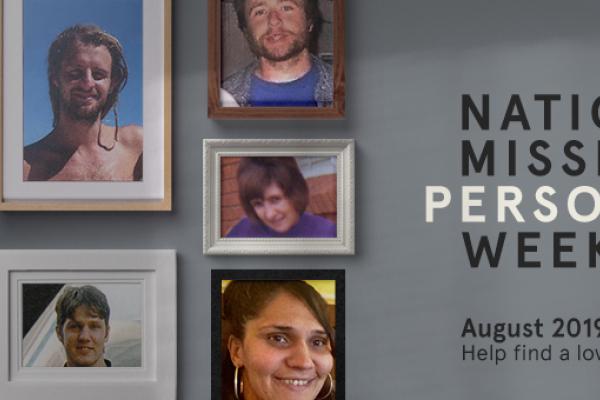 Individuals not statistics - Australian Federal Police shift focus from statistics for National Missing Persons Week 2019The Australian Federal Police (AFP) National Missing Persons Coordination Centre (NMPCC) is shining a spotlight on Australia’s long term missing with the launch of National Missing Persons Week (NMPW) running from 4 - 10 August 2019.Annually, National Missing Persons Week strives to create awareness throughout the wider Australian community, targeting those who have never thought about a missing person or the impact it has on their families and friends.In its 31st year, National Missing Persons Week aims to continue this narrative by focusing on ‘individuals not statistics’ – the theme of this year’s campaign. It’s about going beyond the statistics of Australia’s missing population and focusing on the individuals.AFP Commander Justine Gough who among her roles manages the National Missing Persons Coordination Centre said it is sometimes easy to generalise the 2,600 long term missing persons in Australia and lose the essence of the individual.“The people captured in the statistic are not just ‘missing persons’, they are fathers, daughters, and sons; students, chefs and academics, we don’t want people to forget that,” Commander Gough said.As part of the National Missing Persons Week campaign for 2019, the National Missing Persons Coordination Centre is profiling eight long-term missing persons from around the nation. Unlike previous years, the new design removes the ‘persons’ from National Missing Persons Week and replaces it with the name of the real person being profiled.The eight profiles have been selected by the National Missing Persons Coordination Centre in consultation with State and Territory Missing Persons Units and include Andrew Dymott (VIC), Ashley Bindon (NSW), David Mansell (SA), Martyn Tann (WA), Michael Lorenz-Schrader (QLD), Nazrawi Woldemichael (TAS), Rebecca Hayward (NT), and Wendy Dalla (ACT).To complement the profiling element of the campaign, the National Missing Persons Coordination Centre have also joined forces with media personalities and social media influencers to amplify messaging on social media during National Missing Persons Week. The influencers will use their platform to share content to raise awareness of the issue and importance of the week.AFP Commander Gough reminds us that no-one is immune to the social issue, and that it’s all of our responsibility to help raise awareness to reduce the incidence and impact ‘missingness’ has on our society.“Anyone, regardless of gender, age, ethnicity or educational background, may face the issue of someone they know becoming a missing person. It is crucial we reach the wider Australian community; those who have never thought about a missing person, or who believe the impact of a missing person will never affect them.“The community also plays a critical role in helping police find people who go missing, and we urge anyone with information relating to a missing person, no matter how small, to contact Crime Stoppers on 1800 333 000,” said Commander Gough.Members of the community sharing their stories and support throughout National Missing Persons Week 2019 are encouraged to use the hashtags #IndividualsNotStatistics and #NMPW2019 in support of this year’s campaignNational Missing Persons Week is supported by the Outdoor Media Association. For more information on the NMPCC and NMPW 2019 and to watch the campaign unfold, visit www.missingpersons.gov.au or https://www.facebook.com/AFPNMPCC.ABOUT MISSING PERSONS IN AUSTRALIAIn Australia, a missing person is defined as anyone who is reported missing to police, whose whereabouts are unknown, and where there are fears for the safety or concern for the welfare of that person. A long-term missing person is someone who has been missing for more than three months.ABOUT THE NATIONAL MISSING PERSONS COORDINATION CENTREThe AFP’s National Missing Persons Coordination Centre plays an active role in coordinating national police efforts, and educating the Australian community to prevent the incidence and impact of missing persons in Australia.The National Missing Persons Coordination Centre is a non-operational arm of the AFP which put simply means, the team is not involved in the investigations of missing persons. All investigations are undertaken by the relevant State and Territory Police.Each year, the AFP, through the National Missing Persons Coordination Centre, takes the lead in coordinating the national promotion of the week to the Australian public.Editor’s NoteRadio grabs from AFP Commander Justine Gough can be downloaded here.Media EnquiriesFor more information or to request an interview on National Missing Persons Week 2019, get in touch with Australian Federal Police.AFP National Media(02) 5126 6395AFPNationalMedia@afp.gov.au2Aug 2019
 - Putting the faces of missing people back on milk cartons
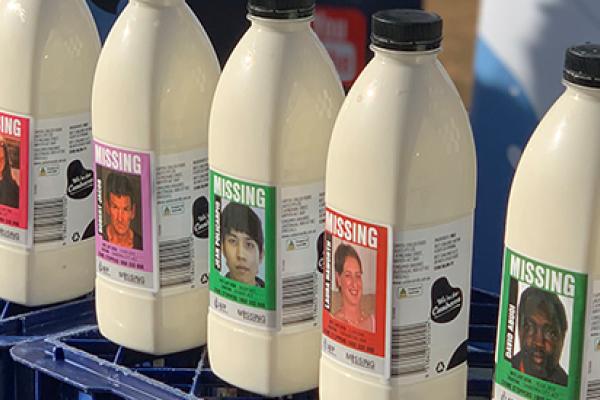 Putting the faces of missing people back on milk cartonsThe Australian Federal Police (AFP) and Canberra Milk are joining forces to put the faces of missing people back on milk bottles in the Australian Capital Territory (ACT).AFP Assistant Commissioner Debbie Platz said the initiative – which launches in the ACT region on 6 June – will see 12 long-term missing people with connections to the Canberra region featured on one litre fresh milk bottles for six weeks.“This initiative will result in missing persons’ profiles being seen by many thousands of Canberrans every time they have a bowl of cereal, bake a cake or make a cup of tea,” Assistant Commissioner Platz said.“It takes back to the days, before Amber Alerts and social media notifications, to when reports of missing people appeared in a place guaranteed to catch the eyes of the broader population – on milk cartons.“In turn, we hope this tried-and-tested method will start a new conversation about the region’s missing people and how the community can help police find them.”Capitol Chilled Foods Australia, Director David Tyack said we wanted to take part in this opportunity to partner with the AFP & NMPCC, to help those in our community that have been effected by loved ones gone missing.“We thought it would be a great idea to help get the message out by going old school and advertising on our 1L Canberra Milk Full Cream bottles”, Director David Tyack said.ACT Chief Police Officer (CPO) Ray Johnson said it’s important that we raise awareness of this issue of long term missing people, and how Canberrans are our eyes and ears.“There are families who have been waiting, in some cases for decades, for news about their loved ones. This new campaign is one more tool to that may provide vital information to investigators in each of these 12 cases.“If you recognise any of the missing people profiled in the campaign, or have information about any of Australia’s long-term missing persons on the Public Register at www.missingpersons.gov.au, please contact Crime Stoppers on 1800 333 000,” CPO Johnson said.For more information on the AFP National Missing Person’s Coordination Centre (NMPCC), visit: www.missingpersons.gov.au and www.facebook.com/AFPNMPCC. The Canberra Milk one litre bottles can be purchased from all usual Canberra Milk retailers.The twelve profiles have been selected by the ACT Policing missing person unit and include:Laura HAWORTH (ACT)Elizabeth HERFORT (ACT)Amelia HAUSIA (ACT)Kate ALEXANDER (ACT)Megan MULQUINEY (ACT)David ABUOI (ACT)Jean POLICARPIO(ACT)Owen WILLIAMS (SA)Wayne PICKETT (NSW)Anthony FAHEY NSW)Robert JACOB (ACT)Wendy DALLA (ACT)Subscribe and receive email alerts(link: https://www.afp.gov.au/news-media/media-releases) when new media releases are published.6Jun 2019
 - International Missing Children’s Day: AFP short film asks Australians to consider world’s missing children
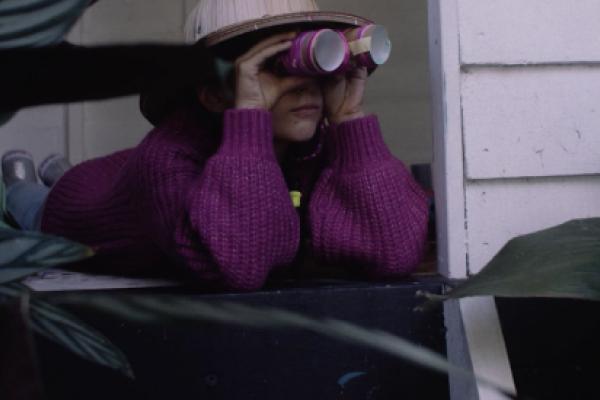 International Missing Children’s Day: AFP short film asks Australians to consider world’s missing childrenThe Australian Federal Police (AFP) has released a short film on International Missing Children’s Day to raise awareness of missing children in Australia and around the world.Today (25 May) is a day for remembering children from Australia and across the world who are still missing, paying tribute to those who were victims of crime, acknowledging children who found their way home, and supporting the families, friends and communities of missing children in their ongoing search.The AFP National Missing Persons Coordination Centre (NMPCC) has developed a digital campaign to spread awareness of this important day and the issues associated with it. The campaign includes a digital poster series designed to highlight the prevalence of missing children on a global scale, and the focus piece, a creative video, that depicts a little girl who represents over one million missing children around the world, and the life experiences that could have been. AFP Manager Child Protection, Commander Justine Gough, said the short film provides some insight of the effect that a missing child can have upon those who are left behind.“We hope this film shows the impact that a missing child can have on their family members, friends and loved ones.”“When a child goes missing, there is not only the initial pain and loss associated with the horrific event, there is also the ongoing impact the family members feel.”“That child’s potential, everything they could have done, or big milestones they would have achieved are painful reminders of the loss that may have occurred many years earlier,” Commander Gough said.The loss of a missing child is one felt intensely by Wodonga couple Jim and Cathy McDougall.In 2007, their daughter, Chantelle and granddaughter, Leela, were reported missing. In the 12 years that have followed, there is still no definitive answer to the question, what happened to them? “I guess it doesn’t get any easier, the hard part for me is that it seems to get harder rather than easier,” said Jim McDougall, when reflecting on the life he and his wife lead in hope to one day be reunited with both Chantelle and Leela.This International Missing Children’s Day the NMPCC is also re-releasing an age-progressed image of Leela McDougall in the hope that someone out there today may be able to recognise her.“It would be lovely to be able to see her, to talk to her; it’s absolutely a good likeness of her I think”, said Cathy McDougall.Approximately 25,000 young people are reported missing in Australia every year. Most children who are reported missing are found safe and well within 24 hours. For those who are not, what follows can be months and years of heartbreak and confusion.Around the world, it is estimated that over one million young people are reported missing every year.This year’s digital campaign has been shared with the International Centre for Missing & Exploited Children’s (ICMEC) Global Missing Children’s Network (GMCN) in order to promote the message worldwide. The GMCN is an important coalition of 29 countries across five continents that works together to unite the global community to find missing children."There are model countries when it comes to finding missing kids and Australia through the AFP's NMPCC, is leading the way," Said Paul Shapiro, Chief Executive Officer of ICMEC."Together with all of our member countries - we are creating a movement that leverages the best technology and strategy to face this issue.”“We are proud to celebrate International Missing Children's Day 2019 to highlight the prevalence of missing children worldwide and the progress we are making together”.For further information on missing persons and to share the International Missing Children’s Day message with your networks, visit ‘The National Missing Persons Coordination’ Facebook page (@AFPNMPCC). Profiles can also be viewed at missingpersons.gov.au. The AFP works with State and Territory police to profile missing persons, and the Family Law Courts to publicise and recover parentally abducted children. Anyone with information relating to a missing or parentally abducted child is urged to contact their local police or Crime Stoppers on 1800 333 00. Media enquiries:AFP National Media: (02) 6131 6333Subscribe and receive email alerts (link: https://www.afp.gov.au/news-media/media-releases) when new media releases are published.24May 2019
 - AFP launch updated framework to support those with a missing loved one
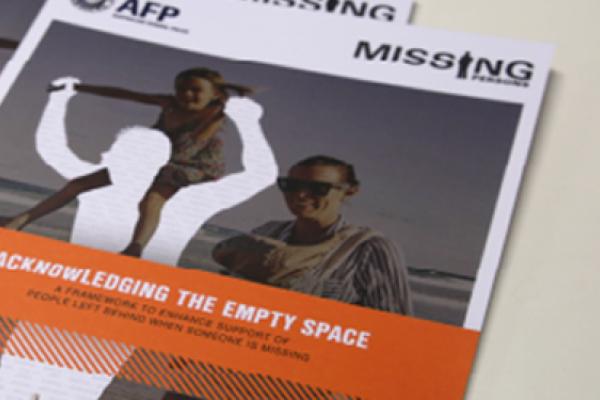 AFP launch updated framework to support those with a missing loved oneThe Australian Federal Police (AFP) National Missing Persons Coordination Centre (NMPCC) today launched an updated missing persons framework in collaboration with the University of New England and public health researcher Dr Sarah Wayland.Acknowledging the Empty Space: A framework to enhance support of people left behind when someone is missing provides an update to the 2007 edition combining international research with practical advice to assist police, media and counsellors in supporting people with a missing loved one.More than 38,000 missing person reports are made to police every year in Australia and while the majority of missing persons are found safe and well, more than 2,600 remain missing long-term.All missing persons leave behind a network of people who must be supported.AFP Assistant Commissioner, Debbie Platz said the reasons for a person’s disappearance are many and varied but for each missing person there are family, friends, colleagues and a community left wondering what has become of someone they love.“Dr Wayland’s updated framework provides an incredible opportunity to support those left behind and educate everyone involved including law enforcement, counsellors, media and the wider community,” AC Platz said.Researcher and former manager of the NSW Department of Justice, Families and Friends of Missing Persons Unit Dr Wayland outlined what typically happens when someone goes missing and the impact their disappearance has on families and friends."Often, when people came for counselling, they'd say they were traumatised not just by the fact that their loved one was missing but also by people's uncertainty about the support they might need, purely because they had never faced such a loss before," Dr Wayland said.The updated framework contains insights from family members, friends and others who have experienced firsthand the pain caused when a loved one goes missing. The framework explores how supportive interventions and social connectedness can ease the burden of ‘not knowing’ by providing information on how to support and interact with families and friends left behind.To launch the release of the update of this highly anticipated framework, the NMPCC will be hosting a Facebook Live Q&A Session on their Facebook page at 12.30 pm today. The Q&A will provide those interested with the opportunity to hear from and engage with Dr Wayland to learn more about the updated research.The updated framework is available on the NMPCC website: https://missingpersons.gov.au/about/publicationsMedia enquiries:AFP National Media: (02) 6131 63333Mar 2019
 - Traceless postcards offer gift of hope this Christmas
 Traceless postcards offer gift of hope this ChristmasA message on a traceless postcard could help to reconnect families living with the grief and uncertainty of a missing loved one this Christmas.The Australian Federal Police’s (AFP) National Missing Persons Coordination Centre (NMPCC), Australia Post, and the Salvation Army are working together to provide non-traceable, postage-paid postcards, to those in the community disconnected from their families.AFP Assistant Commissioner Debbie Platz, National Manager Crime Operations, said people go missing for a variety of reasons and it is not a crime to do so. Regardless, the uncertainty is often devastating for family and friends, especially during the Christmas period.“The initiative aims to reconnect missing persons and the people left behind – those left wondering what happened to their loved one,” Assistant Commissioner Platz said.“People, whether missing or estranged from their loved ones, can write a message on the postcard – available at Salvation Army centres – which will be delivered via a central Australia Post facility anonymously, with no identifiers of the sender’s location. This method ensures that those people who choose to be ‘missing’ can send a message home without their whereabouts becoming known.”Families of missing persons often describe important dates such as birthdays and anniversaries as triggers that bring on both happy and sad memories, reminders of good times and the existing loss. This is especially the case during the Christmas and New Year period – a time normally reserved for family reunions and get-togethers.“Receiving a message from a missing loved one could be the greatest Christmas gift for families waiting for answers,” Assistant Commissioner Platz said.“The festive season is a joyful time but it can also sharpen the pain caused by those absent during the holiday period. We hope this campaign provides the catalyst for those choosing to be distant from their families to let them know they are OK.”A corner stone of the campaign is the partnership with the Salvation Army, whose staff and volunteers are responsible for distributing and collecting the postcards.Lieutenant Brad McIver, Community Service Operations Manager for the Salvation Army, said they were very happy to be partnering with the AFP to help people reconnect with family.“We see the availability of these postcards as a wonderful way for people to let loved ones know that they are okay, and to perhaps consider a more long-term reconnection with their families,” he said.Australia Post’s support of the NMPCC has been instrumental in getting this initiative off the ground with printing, collection and postage of postcards.For more information about what the Salvation Army is doing at Christmas across the country, go to https://www.salvationarmy.org.au.Media enquiries and interview requests:For more information or to request an interview, contact AFP National Media on 0437 477 430.Subscribe and receive email alerts(link: ://www.afp.gov.au/news-media/media-releases) when new media releases are published.11Dec 2018
 - Sending a message of hope to loved ones this Christmas
 Sending a message of hope to loved ones this ChristmasFor those families living without ‘knowing’ what has happened to a loved one the impact can be described as an emotional ‘roller-coaster’. An item, place or smell may revive a memory of that person, evoking an unexpected emotional change. Families often describe important dates such as birthdays and anniversaries as acting like triggers, bringing on both happy and sad memories from family gatherings and events. A time of year when this is especially true is during the Christmas and New Year period. A time normally reserved for happy family reunions and get-togethers.To assist families living with a missing person, the Australian Federal Police (AFP) National Missing Persons Coordination Centre (NMPCC) in partnership with Australia Post and the Salvation Army are providing non traceable, postage paid postcards to those in the community disconnected from their families, allowing a message of hope to be sent home during the Christmas period.These free postcards will be available to collect from Salvation Army staff and volunteers. After collecting a postcard, a message can be written on the back, as well as the final destination address and put it into the pre-addressed envelope that will also be provided. The post card will be sent to a central Australia Post location, for it to be forwarded on to the final recipient. The post markings on the postcard will be that of the central Australia Post location, allowing those choosing to be distant, a method by which to send a non traceable message home.The aim of the Christmas campaign is to provide hope to those families living with the feelings of confusion, frustration and sadness, whilst awaiting news on their loved one. A short message from a disconnected family member may brighten an otherwise gloomy Christmas period.If you are a family member living with a missing person and are in need of assistance, please see our support services page.To request further information on the Christmas Postcard Campaign, please email the NMPCC via our contact us page.2Dec 2018
 - Missing Persons Advocate: Melissa Pouliot
 Missing Persons Advocate: Melissa PouliotMelissa is a woman who wears many hats; wife, mum of three, cricket mum, dance mum, media company owner, outdoors lover, book lover and keen mountain bike rider. You would think she wouldn’t have much time to relax, but around her busy schedule, Melissa manages to write crime fiction novels and speak around the country advocating on behalf of families of missing persons. Melissa has strong personal ties to the issue of missing persons. In 1987, when she was just 15 years old, her cousin Ursula went missing. She was on her way to the ‘big city’ to follow work and after her family said goodbye to her at the train station, they never heard from Ursula again.Melissa’s relationship with Ursula was that of very close cousins. Melissa recalls how growing up on a farm meant that as kids, they would spend their days picking blackberries, riding motorbikes, camping and picnicking. They would ‘pack a lunch at the start of the day and head for the hills and come back at night’. They would share many chats and memories together, but it is the specific conversations that Melissa finds hard to recall. “I wish we had some recordings of her talking and laughing, as I have her voice in my head but it's so long since I’ve heard it out loud… I miss her.”During the many years spent searching for answers, Melissa said it was a difficult process. As she was quite young at the time of Ursula’s disappearance, she felt a very strong sense of powerlessness in being able to find her.It took Melissa’s family 30 years to discover Ursula’s whereabouts, and a fresh investigation which started in 2014 ended last year with confirmation from police that she had sadly died in a car accident shortly after going missing.It is this experience that clearly defines Melissa and her passion for helping others. As an advocate for missing persons, Melissa speaks regularly and is a Day for Daniel Ambassador. By generously sharing her personal insights, she hopes it will help others going through a similar uncertain journey. “I turned to writing as a creative outlet to help me work through my emotions, which I had buried for a really long time until I published my first novel inspired by Ursula in 2013, and spoke publicly about her for the first time. I really need something to help me get through the renewed investigation for her, and that’s where writing became such an essential part of my life.”Melissa created a successful book series based on fictional characters. With five novels published, and now working on her sixth, they help her step away from her real life trauma. Drawing on her own experiences, her fast-paced novels are helping people all over the world better understand the confusing and emotional rollercoaster of having a missing loved one.When asked what she would like to pass on to the many families of long-term missing persons dealing with ambiguous loss, Melissa says:“The main message I try to pass on is to never give up hope. I really held onto that strongly through the past five years and that’s what drove me forward to keep speaking up for Ursula. The hope was initially to honour her memory and that was my driver. Then it became clear there were things that weren’t looked into, and it became hope for fresh eyes on her case. The hope kept transferring, shattering and swinging around, but I had to try to reinvigorate it continually in the hope we would discover the truth. Hope isn’t just one word, it doesn’t mean one thing. Hope is the pillar of small wins along the way.”Further to everything she has so far accomplished, Melissa is running her successful business, MP Media Solutions, which aims to support her clients work and celebrate their successes. This year she has volunteered her time to help her home community of Tathra after the devastating fires that tore through the small coastal town in March, and has collected thousands of new books to replace lost home libraries through the “Book Love for Tathra” campaign.With so many balls in the air and such a selfless and friendly personality, Melissa is a truly inspirational person who has turned what was such a devastating loss into a lifetime of advocacy and community service with a focus and passion like no other.We can’t wait to see what is next for Melissa Pouliot.18Oct 2018
 - A missing son, brother and father
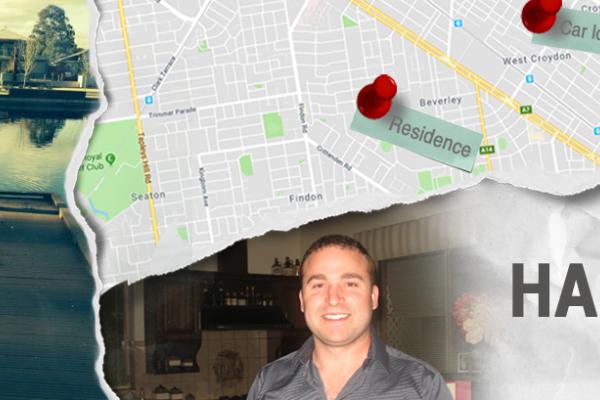 A missing son, brother and fatherMichael as a young child was a quiet boy who didn't like sleepovers much, always preferring to be at home alongside his Papa. But whilst quiet, he was also cheeky especially in the company of his family. Back then VHS recordings were our family’s thing. A big black recorder was carried around like a beat box and captured all the special events. Any family member reading this will vividly remember his beige coloured corduroy overalls, his stumpy legs, those curly blonde locks and Michael Jackson’s ‘Beat It’. He was probably only two at the time, bobbing along to the music. He had everyone cheering him on!Growing up with two older brothers, he shared a room. I can still hear his voice complaining to me that their beds weren't ever made properly. He was always so neat and tidy, and determined. He was always so particular about which clothes he was going to wear, a trait that he carried with him into adulthood. I remember his childhood days. He didn't travel well in the car for many of our family day trips and holidays. He was always stuck sharing the middle seat belt with his sister, back when four across the back was legal. He didn't like the showground rides either, always standing aside to watch his siblings. He did enjoy the summer holidays though and spent hours fishing off the jetty with his family.Most mornings, even after he had moved out of home, he would still pop in for his daily coffee and biscuits and then be off for the day, ironically only to return again around dinner time! We made so many memories around the dinner table. Family tea was my favourite night, and as my children grew so did the dining table- extending to welcome our new joy, grandchildren. Michael was always the one to cause such a raucous in my kitchen. He had such a playful heart, stirring up his nieces and nephews much to their delight and my despair at the noise! I long so very much for those times again. It hurts so much without him.From first instant Michael was the best and most devoted father. They had so much fun together, just playing, going on outings and being silly especially when taking 'selfies'. They were always up to adventures. They went to parties together, to play cafes, to beaches. They walked on the jetty, visited playgrounds, and explored the zoo. They went to the movies, to swimming lessons and even tried out karate. They ate pizza or pasta and then they ate ice cream, three of their favourites. I remember 'that' day clearly. Receiving 'that' phone call whilst interstate was devastating and panic immediately set in… Our lives were changed forever.A life without Michael, for us as his mum and dad, leaves a void of gut wrenching emptiness and grief. A great sadness often engulfs us triggered by a simple thought or photo. Like when I see a car that is the same as his, my heart misses a beat and I panic trying to see if it's him behind the wheel... then I tell myself to breathe. Or when our grandson comes to stay (which he does regularly), I can't help but cry inside and say ‘Where are you Michael? You are missing these milestones and achievements. You're missing this happy fun loving little boy.’ The effects of Michael's disappearance have been different for each of us, each trying to cope in our own way as best we can, yet knowing of each other’s great sense of loss. - Told by Gail Modesti, Michael’s Mother (2018). Michael loved soccer growing up. He was a remarkably skilled and talented club player. Trophies lined the shelf in his bedroom. Mum always complained of having to dust them long after he had moved out.He was the ‘cool kid’ at high school. He had charisma not only in the way he walked but in the way he talked. He was popular. He knew how to make people laugh; he was a natural at it. Remembering back, he would only ever introduce me as 'his sister'. I rolled my eyes at it back then but now I see that his protectiveness over me was just part of his nature.We weren't really all that close until we both had children. It was only then we would sit in the lounge and actually talk to each other. Not just small talk, but life-talk. These are the moments I treasure. And of course, pasta night! We’re Italian and it’s traditional. We slow cooked sauce all day with chuck, pork ribs or meatballs. Michael was the pasta perfectionist. Actually, he was a perfectionist- full stop!He was the one who stood there patiently stirring the sauce and pasta it as it simmered away. He constantly looked over it, checking a new piece every few minutes. He was the master.I can still see him now, pouring out that steaming pot to drain over the sink. He’d then add a little sauce to the pan, then the pasta and then just enough sauce to coat it. He'd serve us all a bowl, his being the biggest. I’ll admit, he was pretty good at cooking the pasta, but he was also pretty good at complaining ‘the sauce is too thick. Not enough salt. Not enough chilli or it’s too watery.’In saying this though, he was also always the first to compliment Mum on her wins, ‘Good sauce tonight Ma.’Becoming a Father was the best thing to ever happen to Michael. Any outsider looking in would instantly see the love he had for his son – it was adoring and protective. It was fun and filled with friendship. Their bond was strong.They loved each other’s company, and if Michael could have given his son the world he would of.The emotional and physical burden of living without Michael is relentless. You often blame yourself, then you blame others. You are angry, you are frustrated. You feel helpless, you feel hopeless. It doesn’t get any easier, you just learn to manage better.Each of us look at things differently now. We capture the moments. We cherish the time. We hold each other together. - Told by Gisella Hardy, Michael’s sister (2018) Michael Modesti was last seen on 9 May 2016 in Beverley, South Australia. He was 33 years old at the time. The circumstances of his disappearance are subject to investigation and foul play is suspected.10Aug 2018
 - The missing artist
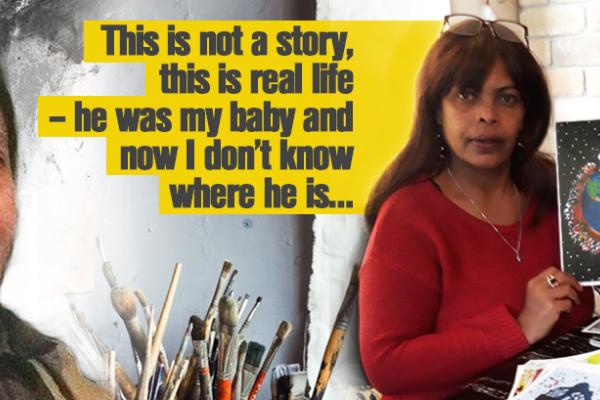 The missing artistNaz was a special son.He was different – quiet, caring and always wearing a big cheeky smile that would warm your heart.I miss him waking me up on the weekends with a coffee or breakfast, begging me to watch a movie or just start the day. He had a zest for life and would never let me sleep in. I don’t know why but, once he’d forced me out of bed, Naz would often head straight back to his bedroom and paint.He would spend hours working on his art, which was how he communicated his unique view of the world and society.I still have his paintings on the walls throughout this house – in the lounge room, in the rumpus room. I love having them there and the way they make me feel like he is still with us. I look at his paintings, flick through his sketchbook and try to figure out why he disappeared.The last 18 months have been really tough. The first Christmas without him we couldn’t celebrate, the second one we tried to but I couldn’t stop crying. We’re a small family and it’s really hard to be ourselves again.If anyone knows anything, come forward.It doesn’t matter what information you have – good or bad – please come forward. It might not seem like something big or important, but it might be.Right now, we’re living in darkness. Time goes by and I’m scared he might be forgotten.This is not a story, this is real life – he was my baby and now I don’t know where he is.I think back to my favourite memory of him. We took him to MONA in Hobart and he was looking at all the weird and wonderful art, unable to contain his excitement. “WHAT THE HELL! WHAT THE HELL!” he was shouting, and everyone in the museum was looking over at him.It warms my heart to think back to that moment, and to see Naz standing there with his big cheeky smile.- Told by Hirut Woldemichael, 2018Hirut’s son Nazrawi (Naz) was last seen on 9 October 2016 in North Hobart, Tasmania. He was 20 years old at the time.10Aug 2018
 - Missing from a town of 12
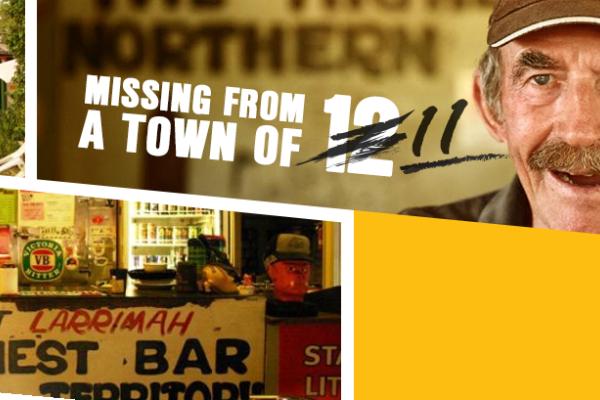 Missing from a town of 12He was your typical Aussie larrikin –Patrick (Paddy) Moriarty, long term resident of Larrimah NT and 1996 Darwin Rodeo Steer Champion, was last seen on 16 December 2017 when he left his house on his quad bike with his best girl – his kelpie ‘Kellie’.Paddy loved a XXXX Gold and a yarn with any tourists or ‘grey nomads’ making their way through the tiny town of 11 residents. It wasn’t exactly a thriving metropolis but it was home to Paddy, where he lived a simple and peaceful life for the last 10-15 years.His best friend Barry owns the “Larrimah Pink Panther Hotel”, which provided Paddy the perfect place to enjoy a daily beer (or four).A man of routine, Paddy would enjoy a few ‘cold ones’ on his designated chair at the Pink Panther every afternoon before retreating home for dinner and bed. His disappearance is described as completely out of character and there were no signs of disturbance at his house.Paddy came to Australia from Ireland at the ripe age of 18, where he worked on stations as a ‘ringer’. Given his experience and knowledge of his local area and the Australian climate, police do not believe that Paddy became lost.Despite extensive searches undertaken by police and emergency services across an 85-square-kilometre zone around Paddy’s home both on foot, dirt bike and helicopter – there has been no sign of Paddy or Kellie (the kelpie).NT Police Detective Sergeant Matt Allen leads the search for Paddy, and tells of his connection to this unique investigation.“Behind every missing person there is a family. This matter is unique as no family links to Paddy have been identified in Australia.”Detective Sergeant Allen says, “Whatever it takes as long as it takes, investigators will never give up searching for Paddy.”If you want to hear more about Paddy and the tiny town he called home, check out the podcast ‘Lost in Larrimah’ which was produced by The Australian in conjunction with Bond University.8Aug 2018
 - When in India
 When in IndiaOdette Houghton had been living abroad in India for over a year when she disappeared around August 1991. In April 1990 she had attended her parent’s 25th wedding anniversary celebrations in Phuket, Thailand. Little did her parents know this would be the last time that they saw their daughter.Regular contact with Odette ceased in August 1991 and the Houghton family have been searching for answers ever since.Odette was an experienced traveller who developed a keen sense of adventure from a young age. She spent her younger years living in the UK where her father, Edward hails from and holidayed at her mother’s home country, Malta, every couple of years.When the family migrated to Australia in 1974 they quickly settled into life in the Nation’s Capital, Canberra and Odette continued a happy and fun filled childhood with her three brothers by her side. “Odette was never in strife as a kid, unlike her brothers” says Edward, describing a young Odette as a happy, outgoing and social girl.Odette was an extremely giving and generous person. Edward remembered fondly that she, “always wanted to do something for someone else”. It was this well-known characteristic that her family and many friends loved about the young “hippy”.Through her adventures overseas she explored many countries and made lots of friends along the way. One such memory came from her time in Japan as Edward explained; “Odette loved street theatre and would perform as a mime in the streets of Japan to make enough money to get by. She also had the idea of getting strawberries and covering them in chocolate to sell for $5 each. She was an entrepreneur in many ways. Always making something to make money…”It was this creative side that is her most memorable trait as Edward reflected often on her love for beading, braids and theatrics.Shortly before August 1991, Edward and his wife sent various items through the post to what they thought to be Odette’s home address in India. After receiving the packages back unopened, they knew something was wrong.Following continual failed attempts to contact Odette, Edward and his wife considered travelling to see her. They reached out to the Department of Foreign Affairs and Trade (DFAT) who advised him that travel to the specific region of India in which Odette was living was too unsafe at the time.Following the 12 month period, Edward and his wife decided to boycott DFAT’s advice and travelled to India with the hope of returning to Australia with Odette in tow. They were met with minimal assistance and came back to Australia with no answers.The underwhelming outcome of the Trip to India sparked interest with well-known Australian lifestyle magazine, Women’s Weekly who offered to travel with the family back to India to further investigate Odette’s whereabouts. On arrival Edward involved himself in conversations with local authorities and community members to understand the crime and corruption in the specific region Odette lived.Although there were several allegations and some information provided to Edward, his wife and Women’s Weekly, all came home without any concrete answers or evidence as to where Odette was.Edward retired at the young age of 50 as the case of his missing daughter began taking its toll on him. “I couldn’t cope with trying to talk to people. I just couldn’t work as my mind wouldn’t be there”. So began Edward’s crusade to assist other families in similar situations, highlight the issue of missing Australians overseas to Parliament and his many attempts to change the Privacy Act to allow families to access valuable information from DFAT that would assist in locating their loved one abroad.Sadly, fast-forward 27 years and the whereabouts of Odette is still unknown. Odette’s mother has since passed away, her two brothers have grown up without their sister and her father, Edward is still without his vibrant daughter.When asked about his fondest memory of Odette, Edward sadly replied, “I can’t think of anything specific as it is all very fuzzy. It was a long time ago…” Two of Odette’s girlfriends, who strangely share the same birthday as Odette, still to this day celebrate their missing friend’s birthday every year. This special act of remembrance shows that this young “happy, artistic and glowing” woman isn’t forgotten and her memory will continue to live on.When travelling overseas there are several things that you can do to ensure your safety and make it easier for Australian authorities to locate you should anything unforeseen happen:Ensure you register your travel and contact details with smartraveller.gov.au Leave a copy of your travel plans with family and friends, including passport, tickets, destinations and contact numbers When informing the bank of your overseas travel, consider giving a nominated person access to your account information. In the event that you are uncontactable bank details can provide a record of possible actions. Arrange options for staying in touch with family and friends while overseas (mobile phone, prepaid or postpaid international calling card, SMS, social media, email etc.) Give your family and friends an indication of how often they will hear from you, and stick to your word. Be conscious of your own safety and security while travelling. Review the travel advice on the Smart Traveller website prior to your trip and subscribe to travel advice updates for the countries you are visiting to keep you informed of any changes leading up to and during your travel.Edward’s daughter, Odette Houghton, had been living in India for approximately a year after a period of overseas travel. She was last seen by her family in April 1990 in Phuket, Thailand. In August 1991, frequent communication with Odette ceased and her family have had no contact from Odette since. Odette was 24 years old at the time of her disappearance.8Aug 2018
Do you have any information relating to a missing person?
Report to Crime Stoppers on
or
Report information via their website
Do you need an interpreter?
If you require assistance in contacting the NMPCC, we are a client of the national Translating and Interpreting Service (TIS National).
Call TIS National on
Call 24 hours, seven days a week.
This service is available to anyone in need of an interpreter. Information translated by TIS National Service is kept strictly confidential.
Do you want to report someone missing?
Call Police Assistance on
Or visit your local police station
Media and partnership enquiries
For all media enquiries please contact AFP Media
Call AFP Media on
or
Email AFP Media at